MACHU PICCHU is visited by an average of 1,500 people a day, confirmed by our wait to board buses lined up like a string of giant sausage links. 400 are offered a special permit to climb MACHU PICCHU MOUNTAIN for which an average of 200 turn back, making it THE way to beat the crowds. The bus dropped us off and we followed a long line up steep steps. The crowd then turned right and my guide directed me straight where there was no one going that way. I bid farewell to my team who followed the large crowd going directly to the Ruins. I reached the registration booth alone, where I was delighted to see there was no line. I signed the register, and it asked my age. I scanned the register and found the next person older than me was 70 and he registered 64 people before me on the previous day.

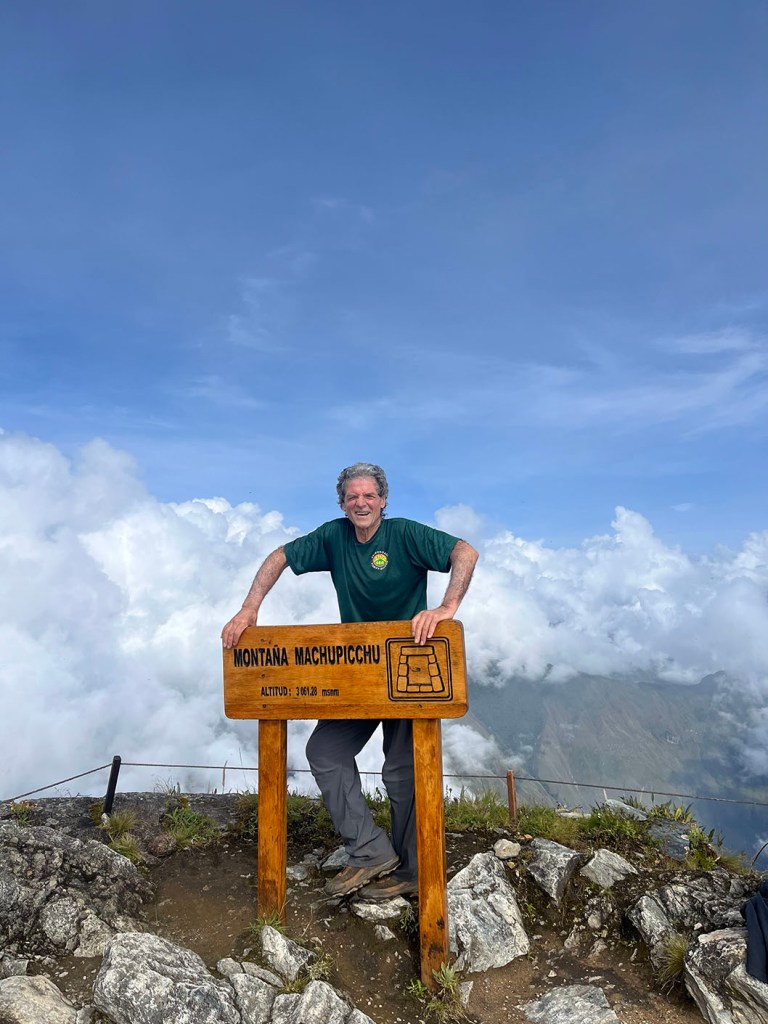
Having hiked about 60 miles the previous week, in much higher elevation and significant elevation gain, I was ready to GO! It’s supposed to take about 1.5 hours and I did it in 1 hour. It was 1. 652 M, (2,139’) of elevation gain. 1,600 steps later, no one passed me, and I passed about 20 on the way.
I was the sixth one to make it to the summit that day, only to discover that I would be waiting out the cloud cover for about an hour. I was cool with that. It was a perfect morning and I had time. I hung out with some great people that I met along the trail. There were only about a dozen of us up there from various parts of the world except the US, and to each of them, English was their second language. With this being the case they all chose to make fun of my “Accent”. We all waited patiently in hopes the clouds would rise and things became rather festive when they finally did. I included a video of our farewell to capture the moment.
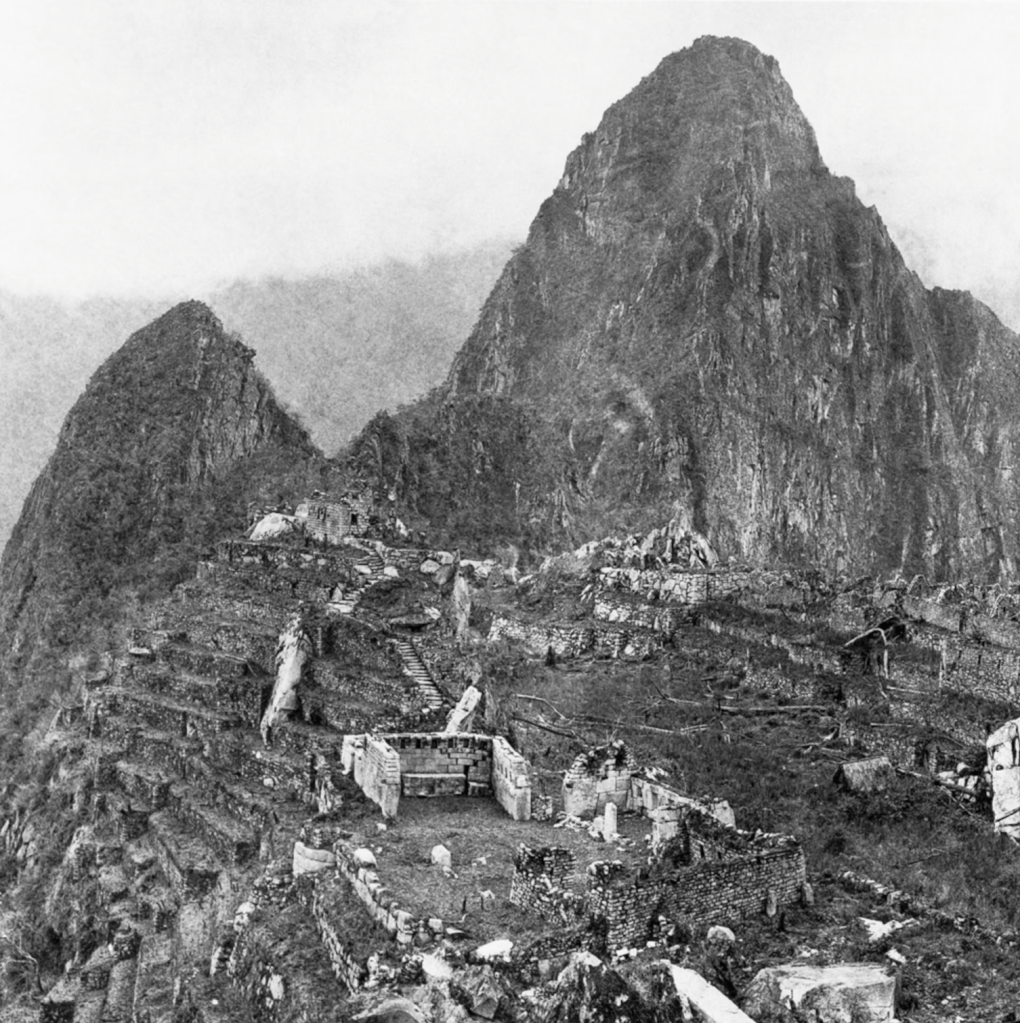
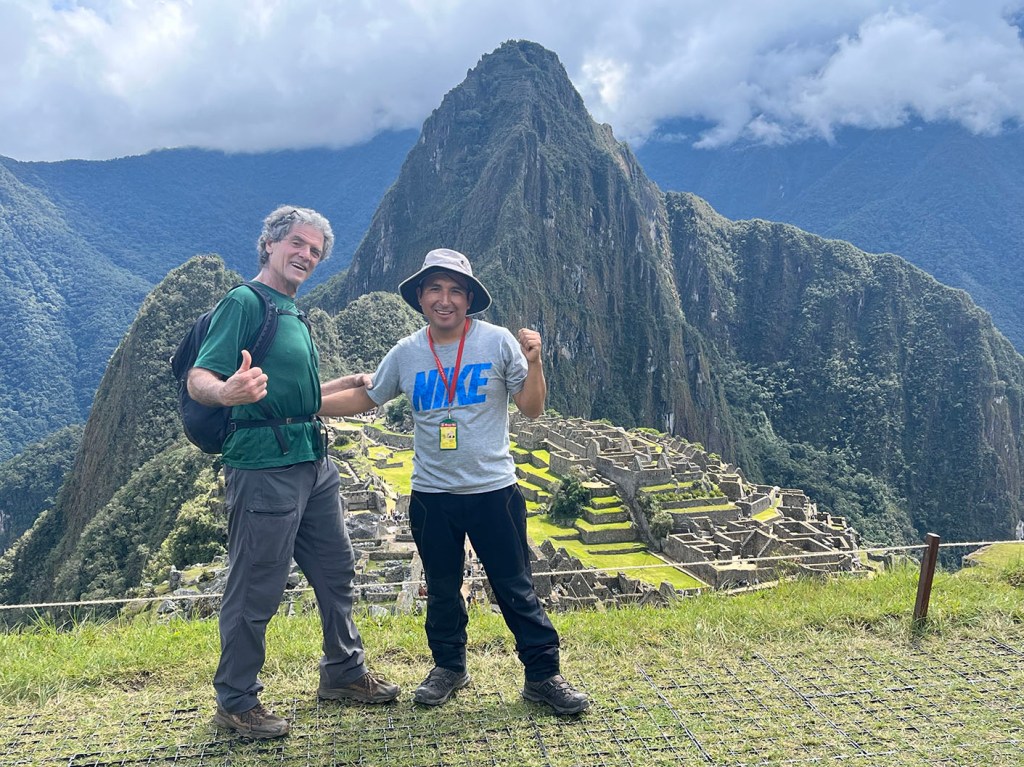
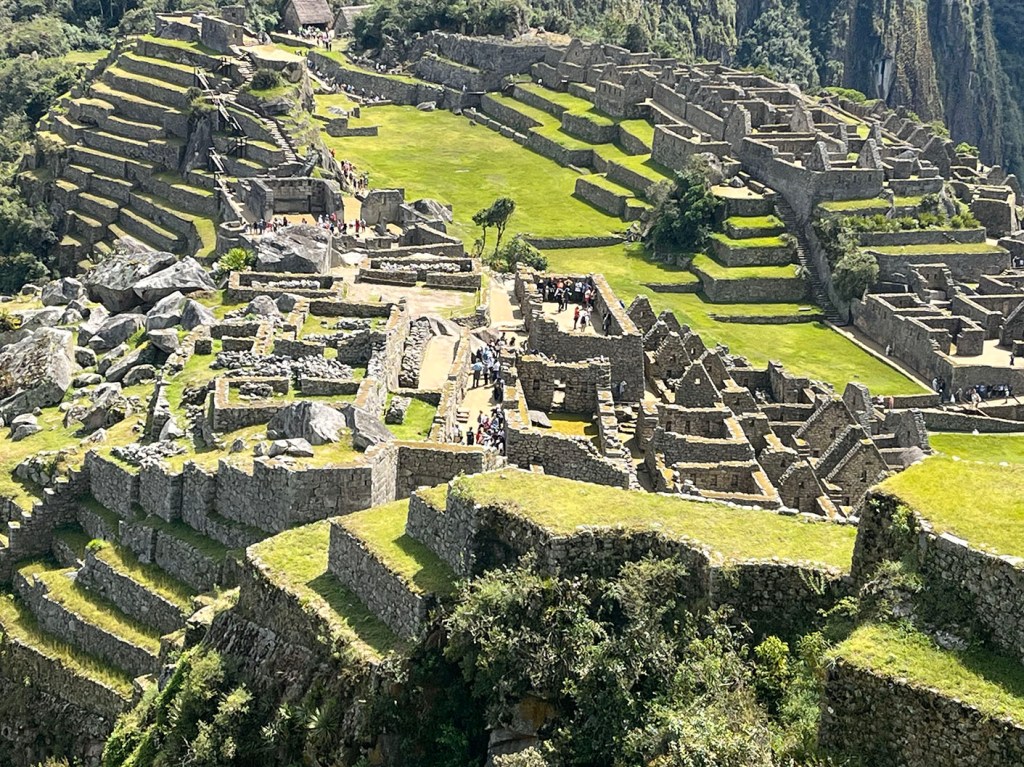
Heading down offered great views and when I got to the bottom I found my guide waiting to take me through the Ruins. Not many share my opinion about this, but I was not impressed. Certainly, the setting is among the most spectacular in the world, but I appreciated it more from above. 95% of the ruins that we toured were restored, and during many of these restorations the placement of most structures are not likely to be where they originally were, and often what they were. It was just a guess. I added a photo from National Geographic, of these ruins before restoration. Other than some of the original foundations, it was all fake. And they will continue to make it more fake, because more fake means more $. I had already learned in CUSCO that our modern machinery and technology does not even come close to the results that ancient builders created some 600 years ago. So I end this adventure asking the same question I asked when I saw my first significant site on my first day in CUSCO.
HOW DID THEY DO IT?
 Rich Citro Adventures