When I arrived at Kilimanjaro International Airport my driver, Mohamad, was waiting and took me to my hotel, the Kilimanjaro Wonder. My hotel was set up by my outfitter and was about a half hour drive located in the city of Moshi. It turned out to be one of the nicest hotels in the area for about $100 a night. Upon arrival I was told that my guide, Berundi, and his associate, Gabriel, would be there the next morning to make the arrangements and to collect the balance. When they arrived I invited them to my room because this was going to be largely a cash transaction. Turns out that cash is king in Tanzania as there are fees of 7% for credit cards and significant fees for bank cash withdrawals. By the end of my trip I ended up doing many more cash withdrawals than expected. I peeled off 27, $100 bills that I had stashed in my money belt and told them the thousand dollars still remaining would need to be paid with a credit card.
Tanzania will only except newer bills dated 2006 or later, and all bills need to have no tears of any kind. Gabriel examined each bill carefully. I pulled out a slightly torn $50 bill and showed it to the guys. I told them that in the States I could tear that bill in half and, as long as the Serial numbers matched on each half, it would be perfectly acceptable currency in the U.S. They were astonished! They were not happy about the $1,000 credit card payment and we had to travel to 2 places that they were associated with to get the credit card through, along with the $70 fee that was on me.
None of this included the customary tipping expectations of my Guide, Cook, and Porters. I will not go into it here, other than to say that it is critical that you research this and do the right thing by taking care of these folks. After getting to know Berundi rather well I had a “Side-Bar” conversation with him on the trail about this. My gut was telling me that I need to help the Tanzanian people. I was regularly reminded of how COVID was disastrous to them. They are more desperate than they have been in many years. I can afford to help and I should. Berundi confided that when they get clients from the U.S., they anticipate the “Big Money”. Russians sometimes don’t tip at all, and everybody else is somewhere in between. After several days of rollercoaster highs and lows, with these dedicated men willing to do what they can to help you, it is only natural to reciprocate for your own piece of mind.
It was then time for Berundi and I to go through my gear. Berundi is a tall and attractive man who is obviously in incredible shape. The average black and brown person you may see in the United States are not as distinctive as Tanzanians. They are black as the ace of spades, with no hint of brown. I found many of the women to be very attractive. Obviously, obesity not common in this land. As he reviewed all my gear, he responded in a voice so thick you would need to cut it with a cleaver “You are well prepared”. I was proud. I also knew that I was too well prepared, and it was time to whittle down some of my excess weight to be fair to the porters. I later learned that there are scales in various places in the park, and that porters may not carry any luggage exceeding 20KG/44lbs. We agreed to leave behind a heavy hooded fleece, extra pair of footwear, and my iPad. We would later discover that Berundi forgot to pack a USB charge wire for his Apple phone. We ended up switching my charge cable back and forth each night and morning. Not sure what he would have done without it.
Berundi and Gabriel also offered a few options for a tour that day. They suggested a waterfalls tour and a coffee plantation tour. It was $70 and I agreed to do it. My guide, “Eddie“, was waiting and we were off to pay the $1,000 credit card balance and go on the tours. Unfortunately, my card would not go through at the first establishment and I ended up taking care of it after the tours at a different business establishment.
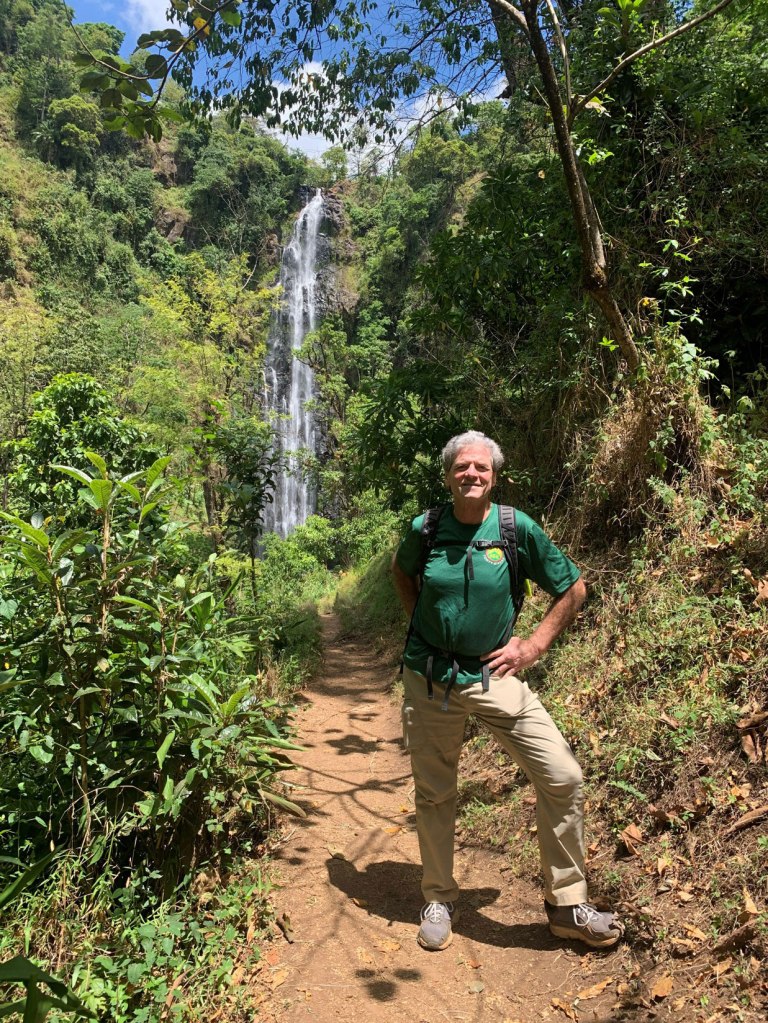
I told Eddie that I hadn’t eaten anything yet so he took me to a fruit stand in Moshi that was perfect. Having arrived the previous evening and now traveling the 20-minute drive for the tour was the first time in daylight I actually saw how these people live. l now understand the definition of the term “Abject Poverty”. The living conditions were frightening and deplorable, but from what I could see, the people appeared happy. The waterfalls tour and coffee plantation tour were way beyond my expectations. I swam in the incredible Mareruni Waterfalls and absolutely Loved it! Eddie also taught me about the customs and traditions of the Chugga people, for which he was one. All Tanzanian children learn Swahili in school, a guideline imposed by their President in 1962. There are over 100 tribes with differing languages, so having them all learn Swahili united Tanzania. Kids are also taught English but the retention depends on the same variables that establish better education in the US or any country.
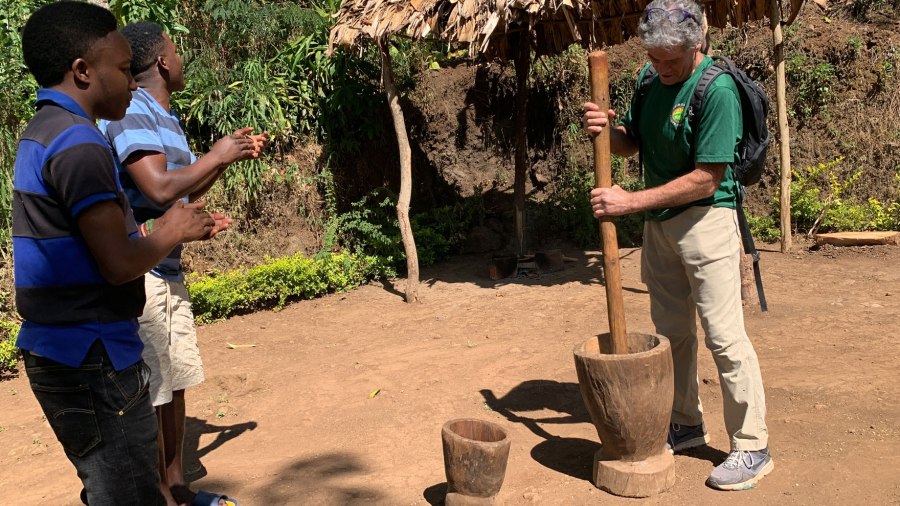
It’s a short walk from the waterfalls to the plantation where we were greeted by some very warm and loving family people. They had me help them process the coffee beans by hand. This is a very involved process that 3 of them and myself partook in while singing the traditional songs with great enthusiasm. It was
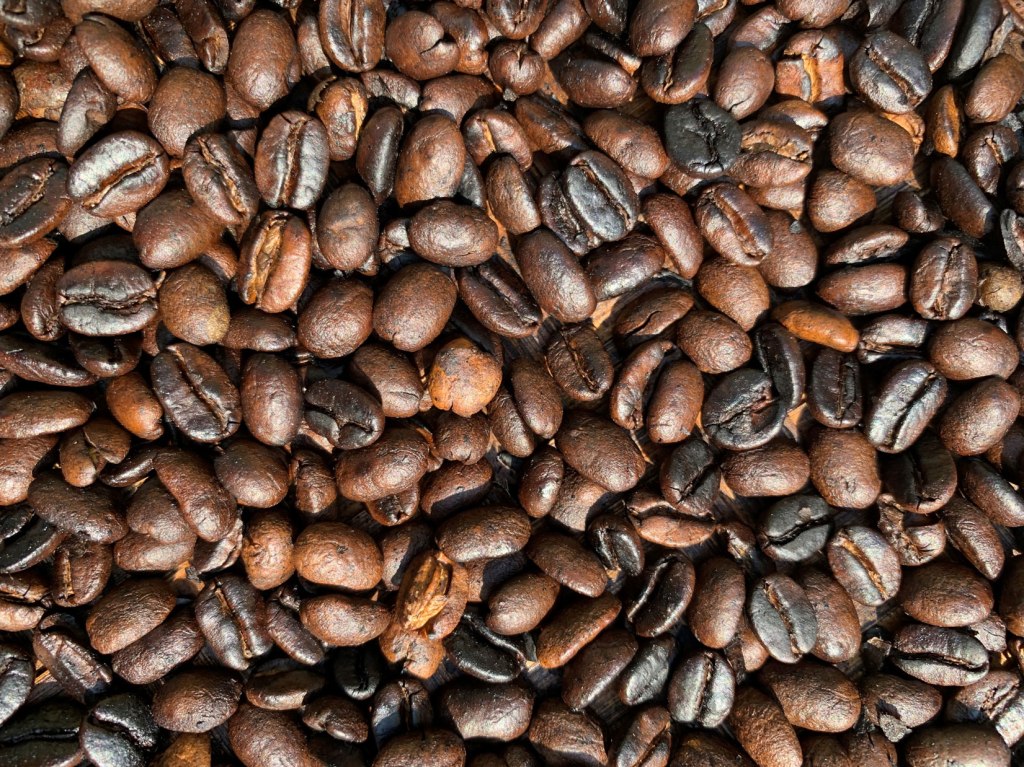
a RIOT!! The songs continued as we roasted the beans in a pot over an open fire and grounded them by pounding to the beat of our
song. They then served me that very coffee “Cowboy Style”. AWESOME!! Naturally they then sold me a pound of that very coffee for $15. I considered it a great deal. They also showed me some hand-painted artwork and I picked up a few art items that I could have bought for less elsewhere, but wanted to support these families.
Eddie was an excellent driver and guide. His English was very good and he knew his business. I got to know him quite well that day and found it easy to discuss something that left me totally amazed. For all the time we had spent together in Moshi, a fairly big town where we had seen literally thousands of people, I was the only white person that I had seen the entire day! In fact, other than a few white people that I saw with guides on the waterfalls tour, the next time I would see another white person was a fellow hiker in the National Park. Rather than feeling unsafe, I frankly felt quite special, though any time I was walking in Moshi I was somewhat swarmed by peddlers. One had a Kilimanjaro hat that I need so I bought it for $10. Eddie made it clear that walking around Moshi or any of these villages at night would be a very bad idea. Someone else suggested that you were good to 10:00PM. Without a guide I stayed in my hotel at night.
 Rich Citro Adventures